
Car Recovery vs. Car Towing in Dubai: Key Differences Explained
Car Repairing
Car Recovery vs. Car Towing in Dubai: What’s the Difference?
A dead battery on Sheikh Zayed Road. A flat tire in a mall car park. A 4×4 stuck in soft sand near Al Qudra. Each of these needs roadside help, but not always the same kind.
Many Dubai drivers use “car recovery” and “car towing” as if they mean the same thing. They overlap, but they aren’t identical. Knowing the difference helps you describe your problem clearly, get the right truck, and avoid extra damage to your vehicle.
This guide explains how the two services differ, when you need each one, and how to stay safe while you wait.
Car Recovery vs. Car Towing: The Key Differences
What Is Car Towing?
Car towing means moving a vehicle from one place to another with a tow truck. The car can usually be reached and loaded without much effort. It might have a mechanical fault, a dead engine, or simply need to go to a garage.
Towing is about transport. The vehicle is accessible, and the job is getting it from point A to point B.
What Is Car Recovery?
Car recovery is broader. It covers any situation where a vehicle must be retrieved before it can be moved. Recovery may involve:
- Winching a car out of sand, mud, or a ditch
- Pulling a vehicle back onto the road after an accident
- Lifting a car from an underground car park with low clearance
- Freeing a vehicle stuck in floodwater
Recovery often ends with towing, but it starts with extra work and specialized equipment. Think of it this way: all towing is a form of recovery, but not all recovery is simple towing.
Roadside Assistance: The Third Option
Some problems don’t need a truck at all. Roadside assistance covers on-the-spot fixes such as:
- Battery jump-starts or replacements
- Flat tire changes
- Fuel delivery
- Lockout help
If your car can be fixed where it stands, roadside assistance may save you time and money. When you call a provider, describe the issue honestly so they send the right help.
Common Situations That Require Vehicle Recovery in Dubai
Dubai’s roads, climate, and terrain create some situations that are more common here than in many other places.
Breakdowns on Highways
Major roads like Sheikh Zayed Road, Emirates Road, and Al Khail Road carry fast, heavy traffic. A breakdown here is stressful and risky. Recovery trucks can safely load your car and clear it from the hard shoulder.
Heat-Related Failures
Summer temperatures put serious strain on cars. Batteries, cooling systems, and tires are especially vulnerable. Overheated engines and burst tires are frequent causes of roadside calls during the hotter months.
Getting Stuck in Sand

Desert driving is popular in the UAE, but soft sand can trap even capable 4x4s. Off-road recovery needs suitable vehicles, recovery straps, and drivers who know the terrain. A standard tow truck usually can’t reach these spots.
Accidents
After a collision, a car may be undrivable or unsafe to move under its own power. Recovery operators can lift damaged vehicles carefully and take them to a garage or another approved location.
Flooded Roads
Heavy rain can quickly flood underpasses and low-lying streets. Driving through deep water can damage the engine. If your car stalls in water, don’t try to restart it. Wait for recovery instead.
Underground and Multi-Story Parking
Low ceilings in basement car parks make it hard for standard trucks to enter. Some providers use compact equipment or wheel dollies to move cars out first.
How Flatbed Towing Works
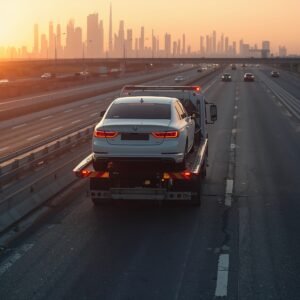
Flatbed towing is one of the most common and safest ways to move a vehicle in Dubai.
The Process
- Positioning: The driver parks the truck in front of your car, ideally on level ground.
- Tilting the bed: A hydraulic system tilts the flatbed down to form a ramp.
- Loading: A winch pulls the car up the ramp. If the car can be driven, the operator may drive it on slowly.
- Securing: The wheels are strapped down at several points so the car won’t shift during transport.
- Transport: The bed returns to level, and your car travels with all four wheels off the road.
Why Flatbeds Are Often the Best Choice
Because the whole vehicle sits on the bed, there’s no wear on the tires, transmission, or drivetrain during the trip. This matters for:
- All-wheel-drive and four-wheel-drive vehicles
- Luxury and sports cars with low ground clearance
- Electric vehicles, which often shouldn’t be towed with wheels on the ground
- Cars with accident damage
Other Towing Methods
Wheel-lift towing raises the front or rear wheels while the other pair stays on the road. It’s quick and works for short trips with suitable vehicles. Hook-and-chain towing is older and can scratch or damage modern cars, so it’s rarely the right choice for passenger vehicles today.
If you drive an AWD car or an EV, check your owner’s manual and ask for a flatbed when you call.
What to Do When Your Car Breaks Down
Staying calm and following a clear sequence keeps you safer.
1. Get Off the Road
At the first sign of trouble, signal and move to the hard shoulder or the nearest safe spot. Avoid stopping on curves, bridges, or in live lanes if you can help it.
2. Make Yourself Visible
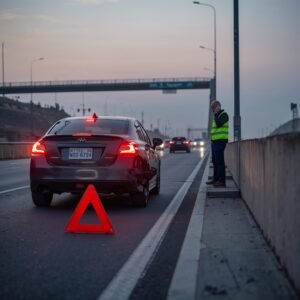
Switch on your hazard lights right away. Place your warning triangle a safe distance behind the car so approaching drivers have time to react. At night, keep your interior light on if you’re waiting inside.
3. Get Yourself and Passengers to Safety
On a busy highway, the safest place is usually away from the car, behind a barrier if there is one, and facing oncoming traffic. Exit from the side away from traffic. Keep children and pets close.
4. Call for Help
- For accidents with injuries, fires, or immediate danger, call 999 (Police) or 998 (Ambulance).
- For non-emergency police help in Dubai, call 901.
- For mechanical problems, call your insurer’s roadside assistance line or a licensed recovery provider.
Share your exact location. Landmarks, exit numbers, and the direction you’re traveling help. Your phone’s map app can share a live pin.
5. Handle Accidents Properly
For minor accidents with no injuries, the Dubai Police app lets you report the incident. If cars are drivable, move them out of traffic. Keep in mind that garages in the UAE generally need a police report before repairing accident damage, so make sure you have one.
How to Choose the Right Recovery Service
Not every provider offers the same quality. Here’s what to look for.
Check Your Insurance First
Many car insurance policies in the UAE include roadside assistance or recovery. Read your policy or call your insurer before paying out of pocket. Save the number in your phone now so you’re not searching for it later.
Confirm Licensing and Professionalism
Choose a provider that operates legally and uses marked, well-maintained trucks. Trained operators know how to secure vehicles and work safely beside traffic.
Match the Equipment to Your Car
Tell the provider your vehicle’s make, model, and drive type. Ask whether they’ll send a flatbed, a wheel-lift truck, or an off-road unit. The right equipment protects your car.
Ask About Coverage Area and Timing
Some providers cover all seven emirates, while others focus on specific areas. Ask for an estimated arrival time and whether they operate 24/7.
Get the Price Upfront
Request a clear quote before the truck arrives. Ask what’s included and whether waiting time, extra distance, or special equipment will cost more.
Read Recent Reviews
Look for consistent feedback on punctuality, communication, and care for vehicles. A single review means little, but patterns tell you a lot.
Safety Precautions for Motorists
Prevention beats recovery. A few habits make a big difference.
Keep an Emergency Kit in Your Car
- Warning triangle
- Reflective vest
- Drinking water (essential in summer)
- Phone charger or power bank
- Flashlight
- Basic first aid kit
- Jumper cables
Maintain Your Vehicle
Regularly check your tire pressure, coolant, oil, and battery health. Heat speeds up battery and tire wear, so pay extra attention before and during summer.
Plan Desert Trips Carefully
Never go off-road alone. Travel in a convoy, lower your tire pressure for sand, tell someone your route, and carry recovery gear and plenty of water.
Avoid Flooded Roads
If water covers the road and you can’t see its depth, turn around. Even shallow-looking water can hide dips and debris.
Protect Yourself in the Heat
Don’t sit in a parked car with the engine off on a hot day for long periods. Find shade where possible and stay hydrated while waiting.
Factors That May Affect Recovery Costs
Prices vary between providers, and the final cost depends on the job. Common factors include:
- Distance: Longer trips usually cost more, especially between emirates.
- Vehicle type and size: SUVs, heavy vehicles, and luxury cars may need specific trucks.
- Recovery difficulty: Winching from sand, ditches, or water takes more time and equipment than a simple tow.
- Location: Remote desert areas or restricted spaces like basement car parks can add complexity.
- Time of day: Some providers charge differently for late-night or holiday calls.
- Equipment needed: Flatbeds, dollies, or off-road units may affect the price.
- Waiting or storage: Extra waiting time or holding your car overnight can add charges.
- Insurance coverage: Your policy may cover part or all of the cost.
Always confirm the full price before agreeing to service.
Frequently Asked Questions
Is car recovery more expensive than towing?
Often, yes. Recovery usually involves extra work, such as winching or retrieving a car from a difficult spot, before it can be transported. Ask for a quote based on your exact situation.
Can any tow truck move an electric vehicle?
Not safely. Many EV manufacturers recommend flatbed transport to avoid damaging the motor or drivetrain. Check your manual and request a flatbed.
Does my car insurance cover recovery in the UAE?
Many policies include roadside assistance or recovery, but coverage varies. Review your policy documents or contact your insurer to confirm.
Should I stay inside my car while waiting on the highway?
On busy highways, it’s generally safer to leave the car and stand behind a barrier, away from traffic. Use your judgment based on the location and conditions.
Can a regular tow truck pull my car out of the desert?
Usually not. Desert recovery needs off-road vehicles and experienced operators. Mention that you’re in sand when you call.
Do I need a police report before my car is towed after an accident?
You’ll generally need a police report for repairs to accident damage in the UAE. Report the accident through the proper channels before arranging repairs.
Final Thoughts
Towing moves your car. Recovery gets it out of trouble first. When you know which one you need, you can explain your situation clearly, get the right equipment, and protect both yourself and your vehicle. Save your insurer’s roadside number, keep an emergency kit in the car, and stay visible and safe if you ever break down.
Leave A Comment